
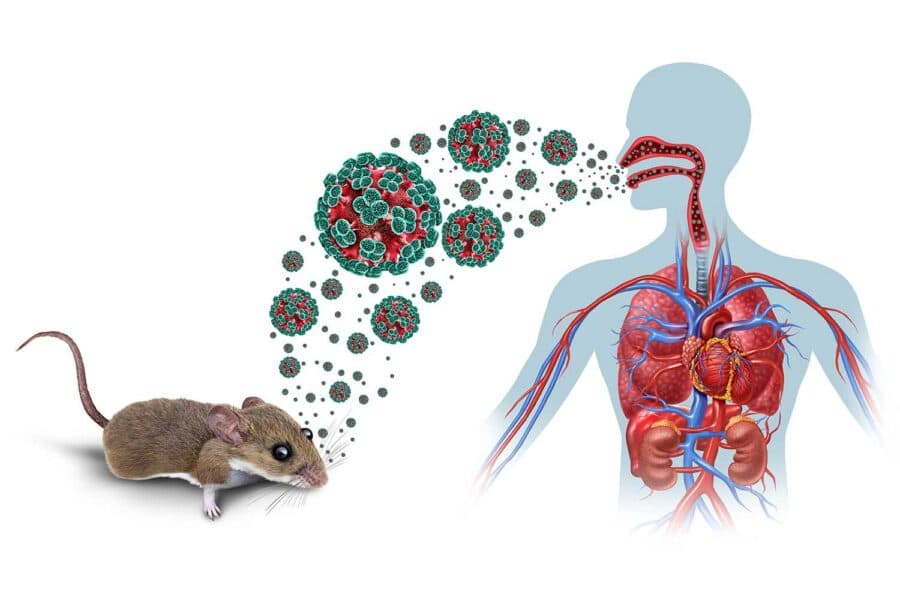
A deadly virus no one was talking about just killed three people on a luxury expedition cruise. Here's everything you need to know — and why experts say this is not the next pandemic.
What Is Hantavirus — And Why Is It Suddenly Everywhere?
Until early May 2026, most people outside of South America had never heard of the Andes virus. Now, it's dominating global headlines after an outbreak aboard the Dutch-flagged expedition cruise ship MV Hondius resulted in at least three confirmed deaths and eight cases across more than a dozen countries.
Hantavirus is a group of viruses carried by rodents — primarily mice and rats — that can cause severe, life-threatening disease in humans. There are more than 50 known types. The strain at the center of this crisis, the Andes virus (ANDV), is found primarily in Argentina and Chile, and it carries the grim distinction of being the only known hantavirus capable of spreading from person to person.
That single fact is what sent international health agencies into high alert.
How Did It Get on a Cruise Ship?
The MV Hondius departed from Ushuaia, Argentina on April 1, 2026, carrying 147 passengers and crew on an expedition to Antarctica. Health investigators now believe that one or more passengers were exposed to the Andes virus in Argentina — likely through contact with infected rodents or their droppings — before boarding the ship.
What happened next was a medical catastrophe unfolding in slow motion in the remote South Atlantic.
By April 11, the first passenger had died on board. The body was not removed from the vessel until the ship reached Saint Helena two weeks later. On April 24, approximately 30 passengers disembarked at Saint Helena — including eight Americans — before hantavirus had even been identified as the cause. One of those passengers, a woman who had been in close contact with the first victim, died on a flight to Johannesburg two days later.
On May 2, 2026, the UK notified the World Health Organization. Laboratory testing in South Africa confirmed hantavirus. The ship was now a floating outbreak.
The Numbers: How Bad Is This, Really?
As of May 9, 2026, here is the confirmed situation:
- 8 confirmed and suspected cases identified across multiple countries
- 3 deaths, two of which are laboratory-confirmed Andes virus fatalities
- Patients are currently hospitalized in South Africa, the Netherlands, Germany, Spain, Switzerland, and Saint Helena
- The MV Hondius is en route to Tenerife, Spain to evacuate remaining passengers, with 22 countries coordinating the logistics
- Exposed passengers have returned to at least 5 U.S. states: Georgia, Arizona, California, Texas, and Virginia — all currently under health monitoring
The case fatality rate for Hantavirus Pulmonary Syndrome (HPS) caused by the Andes virus historically ranges from 30% to 40%, making it among the deadliest viral diseases known to medicine.
Should You Be Worried? What Health Authorities Say
The short answer: no — but stay informed.
The World Health Organization has assessed the global public health risk from this event as low. WHO Director-General Dr. Tedros Adhanom Ghebreyesus emphasized that this is not comparable to COVID-19, citing key structural differences in how the virus spreads.
Here's why experts are cautious but not alarmed:
1. Person-to-person transmission is rare and requires close contact
Unlike COVID-19, the Andes virus does not spread through casual airborne contact. Transmission requires close, sustained contact with an infected person — specifically through exchange of bodily fluids, respiratory droplets at very close range, or contaminated materials. The European Centre for Disease Prevention and Control (ECDC) notes that previous outbreaks have shown transmission limited almost exclusively to family members and healthcare workers without proper protective equipment.
2. There is no evidence of community spread
All cases identified so far trace back to the MV Hondius voyage and associated close contacts. No secondary community transmission has been detected in any country.
3. The virus is not new — and has never caused a pandemic
Hantaviruses have existed for centuries. The Andes virus was first identified in 1993. Despite decades of exposure, no hantavirus has ever sparked a sustained global epidemic.
What Are the Symptoms? When Should You Seek Help?
The challenge with Hantavirus Pulmonary Syndrome is that early symptoms mimic the flu, creating a dangerous window where infected people may not realize they need emergency care.
Early symptoms (appearing 4–42 days after exposure):
- Fatigue
- Fever and chills
- Severe muscle aches, particularly in the thighs, hips, back, and shoulders
- Headaches
- Dizziness and nausea
Late-stage symptoms (can appear suddenly, 4–10 days after initial onset):
- Difficulty breathing and shortness of breath
- Rapid progression to pneumonia
- Coughing (often with fluid in the lungs)
- Acute Respiratory Distress Syndrome (ARDS)
The disease progression in severe cases is strikingly fast. Multiple passengers on the MV Hondius went from mild symptoms to requiring ICU care within 24–48 hours.
Seek emergency medical attention immediately if:
- You have recently traveled to Argentina, Chile, or other Andes virus-endemic regions
- You have had close contact with a confirmed or suspected case
- You develop any combination of fever, muscle aches, and breathing difficulty
No Treatment, No Vaccine: The Frightening Medical Reality
One of the most alarming aspects of this outbreak — and hantavirus in general — is the absence of approved treatments.
There is no specific antiviral drug approved for Hantavirus Pulmonary Syndrome in the United States or Europe. There is no widely available vaccine effective against the Andes virus, though researchers at UC Riverside and other institutions are actively developing candidates.
Treatment is entirely supportive: mechanical ventilation, oxygen supplementation, and management of symptoms. The ship's medical staff, an evacuated Dutch doctor who herself tested positive for the virus, and hospital ICU teams across multiple countries are doing exactly that.
The good news: patients who survive the acute phase typically recover fully. Supportive care, when administered in time and in a well-equipped facility, significantly improves outcomes.
What Authorities Are Doing Right Now
The international response to the MV Hondius outbreak is, by any measure, unprecedented in scale for a disease affecting fewer than 10 confirmed patients:
- WHO is coordinating global surveillance and contact tracing
- CDC is actively working with state health departments in all five affected U.S. states
- 22 countries are sending evacuation aircraft to Tenerife
- ECDC has issued updated infection prevention and control guidance for healthcare facilities
- The EU is providing two aircraft for passengers from countries without individual evacuation plans
- Spain is managing the MV Hondius arrival with strict protocols: no passengers will disembark or have contact with Canary Islands residents; patients will be transported directly from ship to aircraft by speedboat
Contact tracing extends to airline passengers who flew with confirmed cases — including a Johannesburg-to-Amsterdam flight on April 26, which carried at least one confirmed fatality.
How to Protect Yourself
For the vast majority of people, the current risk is extremely low. However, if you are planning travel to South America — particularly Argentina's Patagonia region — or eco-tourism involving rodent-prone environments, here is what health authorities recommend:
- Avoid contact with rodents and their droppings, urine, or nesting materials
- Do not sweep or vacuum rodent droppings dry — use wet methods or wear a respirator mask to avoid inhaling aerosols
- Ventilate enclosed spaces that may harbor rodents before entering
- Practice enhanced hand hygiene if traveling in endemic regions
- Monitor for symptoms for up to 45 days after potential exposure
- Inform medical professionals immediately if you develop fever and respiratory symptoms after travel to endemic areas
If you were a passenger on the MV Hondius voyage or flew on the same aircraft as a confirmed case, contact your local health department immediately, even if you feel well.
The Bottom Line
The 2026 hantavirus outbreak on the MV Hondius is a genuine tragedy — three people are dead, others are fighting for their lives, and passengers scattered across two dozen countries are anxiously monitoring their own health. The international response has been swift and, by public health standards, remarkably well-coordinated.
But this is not COVID-19. It is not the next pandemic. The Andes virus is deadly, rare, and deeply frightening — but it lacks the biological machinery to become a global threat at scale.
What it is is a reminder that novel and dangerous pathogens exist in ecosystems that adventure tourism increasingly brings travelers into contact with. The MV Hondius departed from the southern tip of Argentina, one of the world's most remote and pristine environments — and also a known reservoir for the Andes virus.
As eco-tourism grows, so does the interface between humanity and the pathogens that have always lived alongside us.
Stay informed. Stay calm. Know the symptoms.`;
const videoScript = `# 🎬 THE BIG SCRIPT: "The Cruise Ship That Became a Floating Disease Lab"
10-Minute Horizontal Video | ~1,500 words
INTRO (0:00 – 1:30) | HIGH-TENSION HOOK
[COLD OPEN — No music. Black screen. White text appears:]
"3 PEOPLE ARE DEAD. 8 INFECTED. 22 COUNTRIES SCRAMBLING."
[CUT TO: Host in tight frame, direct to camera, serious tone]
"Three weeks ago, 147 people boarded a luxury expedition cruise in Argentina. They were headed to Antarctica. They thought they were going on the trip of a lifetime."
[Beat. Lean in.]
"What happened next triggered a response from the World Health Organization, the CDC, and governments on four continents."
[GRAPHIC: Map showing MV Hondius route from Ushuaia → Antarctica → St. Helena → Cape Verde → Tenerife, with case markers appearing]
"A virus that most of the world had never heard of — a virus with a 30 to 40 percent fatality rate — and no approved treatment — spread through that ship. And by the time anyone knew what it was, infected passengers had already flown home to the United States, the Netherlands, Germany, Spain, and Switzerland."
[Hold. Pause for effect.]
"Today, we're going to break down exactly what happened on the MV Hondius, what the Andes virus actually is, why this is nothing like COVID — but why you should still pay close attention — and what comes next."
"Stay with me through the end. Because at minute nine, I'm going to show you a data point that changes how you think about adventure travel forever."
[Music kicks in — driving, urgent but controlled]
BODY — SEGMENT 1 (1:30 – 3:30) | "THE OUTBREAK TIMELINE"
[GRAPHICS: Animated timeline with dates and key events]
"Let's start at the beginning. April 1, 2026. Ushuaia, Argentina. The southern tip of the world."
"The MV Hondius — a Dutch-flagged expedition vessel — sets sail with 147 people on board. It's an eco-adventure cruise. Antarctica, remote islands, the kind of trip that costs tens of thousands of dollars."
"Here's what we now know: at least one passenger had already been exposed to the Andes virus somewhere in Argentina before boarding. They didn't know it. The incubation period for this virus is 4 to 42 days. They felt fine."
[TIMELINE GRAPHIC]
"April 11 — the first passenger dies on board. The cause is unknown at this point. The body isn't removed from the ship for 13 more days, until they reach Saint Helena island."
"April 24 — 30 passengers disembark at Saint Helena. Including eight Americans. Hantavirus hasn't been diagnosed yet. Nobody is flagged. Nobody is quarantined."
"One of those passengers — a woman who had been in close contact with the first victim — boards a flight to Johannesburg. She deteriorates mid-air and dies upon arrival at the emergency room."
"April 26 — that same Johannesburg-to-Amsterdam flight is now a contact tracing nightmare."
"May 2 — the United Kingdom notifies the World Health Organization. Lab tests in South Africa confirm it: Andes virus. Hantavirus. And now the world wakes up."
"As of today — May 9th — there are 8 confirmed and suspected cases. 3 are dead. Patients are in ICUs in South Africa, the Netherlands, Germany, Spain, and Switzerland. The ship is heading to Tenerife under escort."
BODY — SEGMENT 2 (3:30 – 5:30) | "WHAT IS THIS VIRUS?"
[GRAPHICS: Animated virus biology, rodent-to-human transmission diagram]
"So what exactly IS hantavirus? Because most people have never heard of it — and that's actually part of the problem."
"Hantaviruses are a family of more than 50 viruses that live in rodents. Mice, rats — they carry these pathogens in their urine, their droppings, their saliva. Most of the time, rodents don't get sick. They're just carriers."
"Humans get infected by breathing in contaminated particles — aerosols — from rodent droppings or nesting materials. In the United States, the Sin Nombre virus causes Hantavirus Pulmonary Syndrome in the Southwest. It kills roughly 35% of people who develop the disease."
[KEY STAT GRAPHIC: "HPS fatality rate: 30–40%"]
"The Andes virus is different in one critical way. It's the ONLY hantavirus known to spread from person to person. Not through the air like COVID. Not through casual contact. But through close, sustained contact — respiratory droplets at very close range, bodily fluids, contaminated materials."
"A cabin on an expedition cruise ship. A couple who shared a small berth for weeks in the South Atlantic. That's the environment where this virus found an opportunity."
"And here's what makes it medically terrifying: there is no approved antiviral treatment. There is no widely available vaccine. The only thing doctors can do is support the patient's breathing and hope their immune system wins."
BODY — SEGMENT 3 (5:30 – 7:00) | "THE PANDEMIC QUESTION"
[GRAPHICS: Side-by-side comparison: Andes virus vs. COVID-19]
"Let's address the elephant in the room. Is this the next COVID?"
"The answer — from every expert I've reviewed — is no. And here's why that answer is actually grounded in science, not wishful thinking."
"COVID-19 is caused by a coronavirus — a pathogen that evolved to spread efficiently through airborne transmission in crowded indoor environments. One infected person could infect 2, 3, sometimes 5 or more people just by breathing in the same room."
"The Andes virus requires CLOSE, SUSTAINED contact. Close family members. Healthcare workers without proper protective equipment. That's why previous Andes virus outbreaks — even in Argentina where it's endemic — have never exploded into large community clusters."
"The WHO's current assessment: global public health risk is LOW. All cases trace back to the MV Hondius voyage and its immediate contacts. Zero evidence of community spread anywhere."
"But — and this is important — 'low risk' doesn't mean 'no risk.' It means the containment math is working in our favor. If that changes, you'll hear about it first on channels like this one."
BODY — SEGMENT 4 (7:00 – 8:30) | "THE GLOBAL RESPONSE"
[GRAPHICS: World map lighting up with responding countries]
"What IS unprecedented about this outbreak is the global response — and it's actually impressive."
"22 countries are sending evacuation aircraft to Tenerife. The EU is providing two planes for passengers from smaller nations. Spain is managing the ship's arrival with military-grade precision: no passengers touch Canary Islands soil, speedboat transfers directly to waiting aircraft."
"The CDC has notified health departments in five U.S. states — Georgia, Arizona, California, Texas, Virginia — where disembarked American passengers returned home. As of today, none are showing symptoms."
"Flight attendants from the Johannesburg-Amsterdam route are being tested. Singapore flagged two returning passengers. The Netherlands hospitalized a patient in Amsterdam. Germany, Switzerland, Saint Helena — all are managing active cases."
"What we're watching in real time is the global public health architecture responding exactly as it was designed to. The lessons of COVID were learned. Contact tracing is moving fast. Isolation protocols are in place."
"The question is whether any gaps exist that we can't yet see."
DEEP DIVE (8:30 – 9:30) | EXCLUSIVE INSIGHT
[HOST: Slower pace, more serious]
"Here's the data point I promised you."
"The MV Hondius departed from Ushuaia — the gateway to Patagonia and Antarctica. It's one of the fastest-growing eco-tourism destinations on earth. Between 2015 and 2024, expedition cruise passengers to Antarctica more than TRIPLED."
"The Andes virus is ENDEMIC in Argentina's Patagonia region. It exists in the local rodent population. It has always been there."
"But for most of that history, the people traveling to that region were a handful of researchers and extreme adventurers. Now, it's tens of thousands of tourists a year — staying in lodges, hiking through rodent habitats, boarding ships in Ushuaia."
"What the MV Hondius outbreak reveals is that as adventure tourism expands into the ecological ranges of deadly pathogens, the statistical probability of exactly this kind of event happening goes up. Every. Single. Year."
"The CDC has not changed its travel guidance for Argentina as of today. Experts say there's no reason to cancel planned trips. But the risk calculation for eco-adventure travel — Antarctica, the Amazon, certain parts of Southeast Asia — is not the same as it was five years ago."
"That's the real story here. Not panic. Not a pandemic. But a system stress test — and a preview of the challenges the world will keep facing as tourism and wildlife corridors intersect."
OUTRO (9:30 – 10:00) | CTA + END SCREEN BRIDGE
[HOST: Returns to direct, calm energy]
"Three people lost their lives on what should have been a dream vacation. Our thoughts are with their families."
"Here's what you need to do right now: if you were on the MV Hondius, contact your local health department immediately. If you're planning travel to South America, watch this video — link in the description — from the CDC on hantavirus prevention."
"If this breakdown was useful — hit subscribe. We cover exactly this kind of story: the real risks, the real data, no panic, no hype."
[END SCREEN GRAPHIC: Channel logo, subscribe prompt, link to article on website]
"Our full written breakdown — with the complete timeline, all the symptoms, and what health authorities are doing hour by hour — is live on the website. Link in the description."
"I'll see you in the next one."`;
const shortsContent = [
{
id: 1,
label: "CLIP 1",
tag: "The Controversy",
color: "#D85A30",
bg: "#FAECE7",
duration: "0:55",
hook: ""This virus has a 38% fatality rate — and there is NO approved treatment. None."",
script: `[VISUAL CUE: Start on black. Bold white text slams in: "38% FATALITY RATE. NO CURE."]
[HOST — tight frame, no fluff, immediate]
"I want to talk about something the mainstream coverage keeps burying in paragraph 12."
"The Andes virus — the hantavirus now killing people on a cruise ship in the Atlantic — has a case fatality rate of 30 to 40 percent. That means roughly 1 in 3 people who develop the disease die from it."
"For comparison, COVID-19 had a fatality rate of around 1 to 2 percent globally."
[ON-SCREEN TEXT: "Andes Virus CFR: 30–40% vs COVID-19 CFR: ~1–2%"]
"And here's the part that keeps me up at night: there is no antiviral drug approved for this. No vaccine available in most of the world. Doctors can only put you on a ventilator and wait."
"Now — the WHO says global risk is LOW. Experts say this is NOT the next pandemic. I believe them. The transmission dynamics are completely different from COVID."
"But I want you to understand WHAT we are dealing with — not a minor outbreak of something treatable. A rare, ancient, and brutally lethal pathogen that just found its way onto a ship with 147 people."
[CLOSING TEXT: "Stay informed. Not scared."]
[CTA: "Follow for daily updates on this outbreak ↗"], onScreen: ["38% FATALITY RATE. NO CURE.", "Andes Virus CFR: 30–40% vs COVID-19 CFR: ~1–2%", "Stay informed. Not scared.", "Follow for daily updates on this outbreak"], editorNotes: "Cut between host and animated stat cards. Keep pace fast — one new text graphic every 8–10 seconds. End on clean black with CTA text." }, { id: 2, label: "CLIP 2", tag: "The How-To / Value", color: "#0F6E56", bg: "#E1F5EE", duration: "0:50", hook: "\"If you've recently traveled to Argentina, here's EXACTLY what to watch for — and when to go to the ER.\"", script: [VISUAL CUE: Opens on HOST with clean background. Calm, direct, authoritative. Split screen with symptom checklist appearing in real-time.]
[HOST]
"Quick public health briefing — because a lot of people are asking what to actually DO if they're worried."
"Step one: know your exposure. Were you in Argentina, Chile, or Patagonia in the last 6 weeks? Did you have contact with anyone from the MV Hondius cruise? If yes, you're in a monitoring category."
[ON-SCREEN TEXT: "✓ Argentina/Chile travel in last 6 weeks?"]