Why Investing $5,000 in SCHD Could Change Your Financial Trajectory
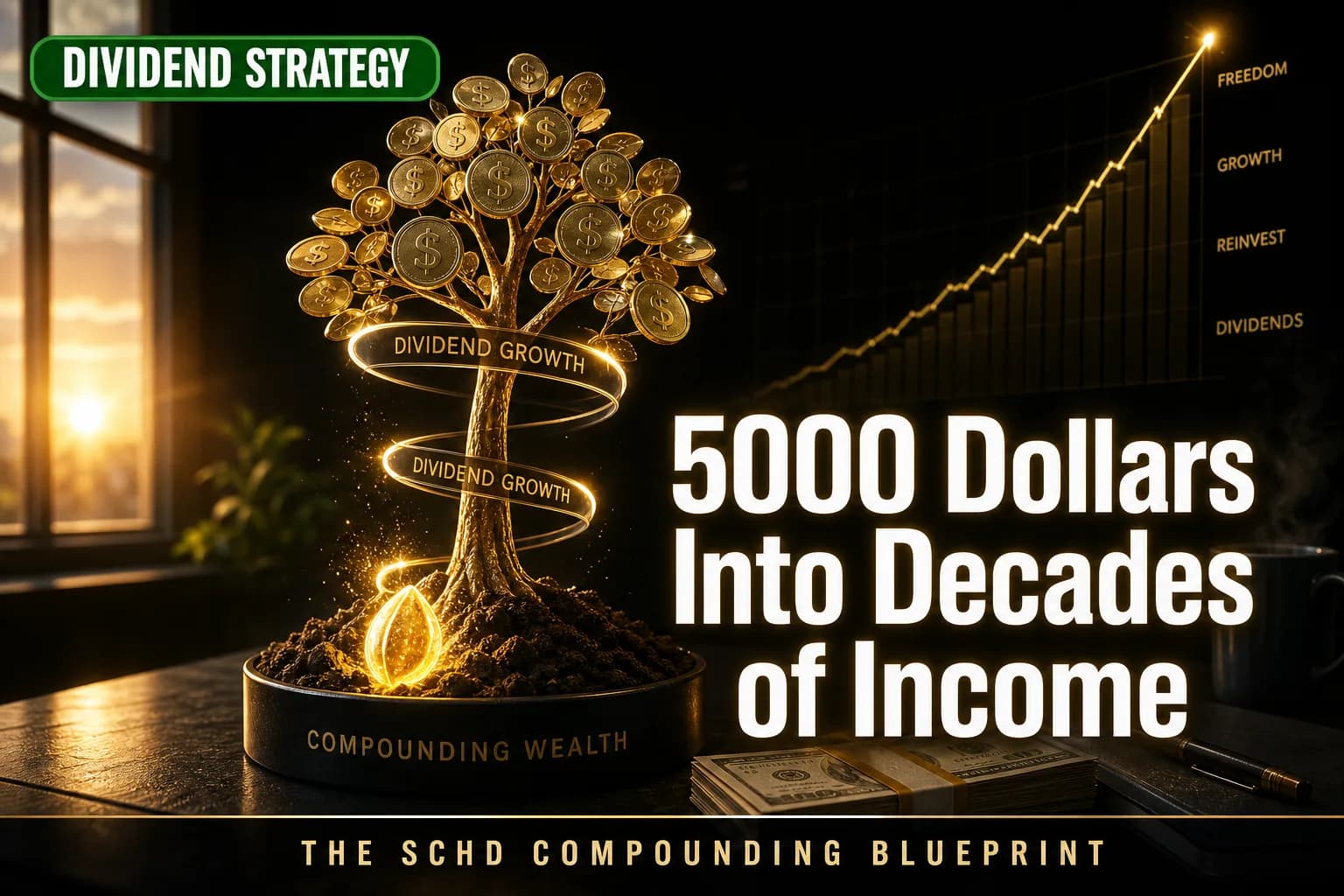
Investing $5,000 in SCHD today isn't going to make you rich next year. But stretched across two decades, that single lump sum could quietly transform into a dependable passive income stream — no extra contributions required. SCHD, the Schwab U.S. Dividend Equity ETF, has become the go-to vehicle for investors who want quality dividend growth without stock-picking risk. With roughly $68 billion in assets under management and a track record of outpacing inflation-adjusted income needs, it's earned its reputation as a "sleep well at night" holding.
The appeal isn't just the current 3.4% yield. It's the combination of yield, dividend growth, and price appreciation that compounds quietly in the background. Unlike high-yield traps that sacrifice growth for income, SCHD tracks the Dow Jones U.S. Dividend 100 Index, screening for companies with at least 10 consecutive years of dividend payments, strong free cash flow to debt ratios, and sustainable payout levels. That screening process matters more than most investors realize.
The Math Behind Investing $5,000 in SCHD
Let's run the numbers conservatively. SCHD has grown its dividend at a compound annual rate of roughly 11-12% over the past decade, though recent years have moderated closer to 8-10% amid a tougher rate environment. Assume a more conservative 8% annual dividend growth rate going forward, paired with a historical average total return near 10-11% annually (dividends plus price appreciation).
A $5,000 investment growing at 10% annually, with dividends reinvested, would balloon to approximately $33,600 after 20 years. That's without adding another dollar. If the yield on the original cost basis grows in line with historical dividend increases, the income generated in year 20 alone could exceed $1,100 annually — up from roughly $170 in year one. That's a six-fold increase in raw income from the same original $5,000.
"The real power of dividend growth investing isn't the starting yield — it's the yield on cost you build over time as payouts compound annually."

stack of growing dividend coins.
Why SCHD Specifically Stands Out for Passive Income
Not all dividend ETFs are built the same. SCHD's expense ratio sits at just 0.06%, meaning fees barely dent long-term compounding — a $5,000 investment costs roughly $3 a year in fees. Compare that to actively managed dividend funds charging 0.5% to 1%, which can quietly erode tens of thousands in returns over 20 years.
SCHD's top holdings typically include names like Verizon, Chevron, PepsiCo, Home Depot, and AbbVie — companies with entrenched market positions and multi-decade dividend histories. The fund rebalances annually, dropping weaker dividend payers and rotating into stronger candidates, which keeps the portfolio disciplined without requiring investor intervention. This mechanical rebalancing is part of why SCHD has outperformed many peer dividend funds since its 2011 inception.
Diversification is another underrated strength. With over 100 holdings spread across sectors like financials, healthcare, industrials, and consumer staples, SCHD avoids the concentration risk that plagues individual dividend stock portfolios. A single company cutting its dividend won't meaningfully dent your overall income stream.
What 20 Years of Compounding Actually Looks Like
Breaking the growth into checkpoints makes the long game easier to visualize. Using a 10% average annual total return assumption:
- Year 5: $5,000 grows to approximately $8,050
- Year 10: Approximately $12,970
- Year 15: Approximately $20,890
- Year 20: Approximately $33,640
The income side compounds even more dramatically because dividend growth stacks on top of price appreciation. If SCHD maintains even a modest 7% average annual dividend growth rate, the same shares purchased today could be yielding north of 13% on the original $5,000 cost basis by year 20. That's the mechanism institutional investors call "yield on cost," and it's the entire thesis behind long-horizon dividend growth investing.
calendar timeline twenty years.