Why Vending Machine Passive Income Is Suddenly Everywhere
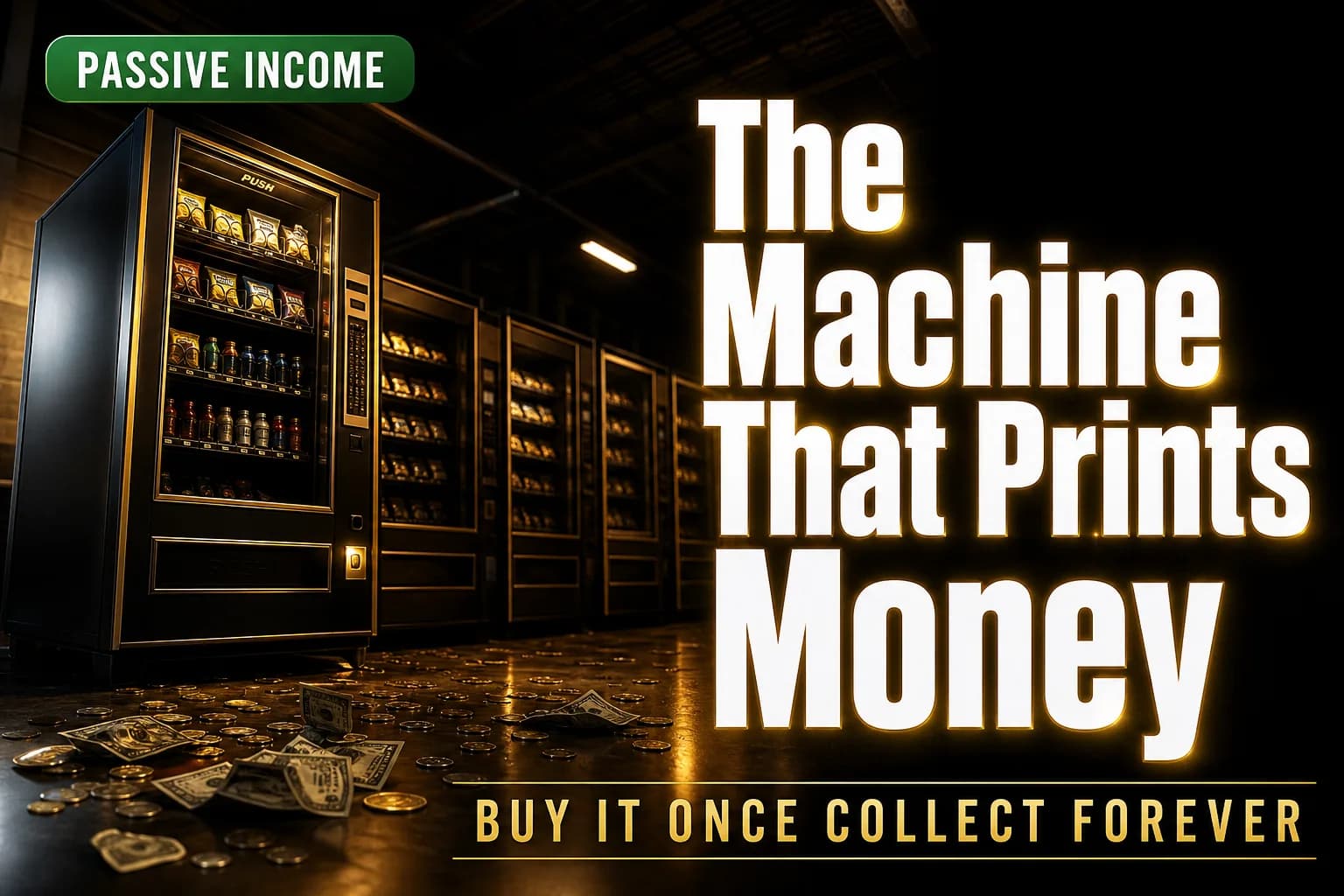
Vending machine passive income is trending after an investor told Yahoo Finance that vending machines are "the only true one-and-done asset" — something you buy once, place, and collect from indefinitely without reinvesting labor or capital. The claim: a well-run route can eventually generate $40,000 per month. That number sounds outrageous until you look at the unit economics, the scale required, and what "passive" actually means once you're 50 machines deep.
This isn't a new idea dressed up in hype. Vending has quietly been one of the highest-margin small businesses in America for decades, with the U.S. vending machine market valued at roughly $8 billion annually according to industry trade data. What's changed is the entry point — cashless payment tech, smart inventory sensors, and route-management software have made it possible to run dozens of machines with a fraction of the labor it took a decade ago.
The Core Pitch: Buy It Once, Collect Forever
The "one-and-done" framing matters because it separates vending from almost every other passive income vehicle. Rental property needs tenants, repairs, and refinancing. Dividend stocks need capital and market patience. A vending machine, once placed under a solid location contract, just needs restocking — and even that can be outsourced.
A single modern vending machine costs between $2,000 and $4,000 new, or $1,200 to $2,500 refurbished. Average net profit per machine ranges from $200 to $500 per month depending on location foot traffic, product markup, and restocking frequency. That means reaching $40,000 a month realistically requires a fleet of 80 to 150 machines — not the two or three most beginners picture.

rows of vending machines lobby.
The Real Math Behind the $40,000 Claim
Here's where most viral headlines skip the arithmetic. At $300 average monthly net profit per machine, hitting $40,000 requires roughly 133 machines. At $500 per machine — a high-traffic, high-margin scenario — you'd need 80 machines to hit that figure.
Break that down by capital: 80 machines at an average $2,500 acquisition cost is a $200,000 upfront investment before you've stocked a single item. This is why vending gets pitched as "passive" but functions more like building a small logistics company. The passivity comes only after years of reinvestment and route consolidation.
Location quality drives everything. Machines placed in offices, gyms, apartment complexes, and hospitals typically outperform ones in low-traffic retail corridors by 2x to 3x on monthly revenue. Operators who negotiate exclusive placement contracts — meaning no competing machine in that building — protect margins that would otherwise erode within months.
What Nobody Mentions: The Not-So-Passive Middle Years
Restocking is the labor vending "gurus" gloss over. A single machine needs restocking every 1-2 weeks depending on volume, and a route of 50+ machines effectively becomes a part-time or full-time logistics job unless you hire route drivers. Driver pay typically runs $18-25/hour, which starts eating into that per-machine margin fast.
Smart vending machines with telemetry — remote sales tracking, low-inventory alerts, cashless payment integration — cost more upfront ($4,000-$7,000) but cut wasted trips by 30-40%, according to vending industry operators. This tech is what actually makes the "one-and-done" claim closer to true at scale, because it converts a driver's guesswork into a data-driven route.

entrepreneur checking vending machine app.